


What Is a Donor Journey? And Why It Matters More Than You Think
Over the past several weeks, we’ve been looking at questions nonprofit leaders and fundraisers raise with us often:
- How do we raise more money?
- What actually makes a fundraising campaign successful?
- Why don’t first-time donors give again?
- How do we create more predictable revenue?
Each question matters. Taken together, however, they point to something many organizations overlook: a great deal of work goes into attracting donors, while far less attention is paid to what happens after someone first connects with the organization.
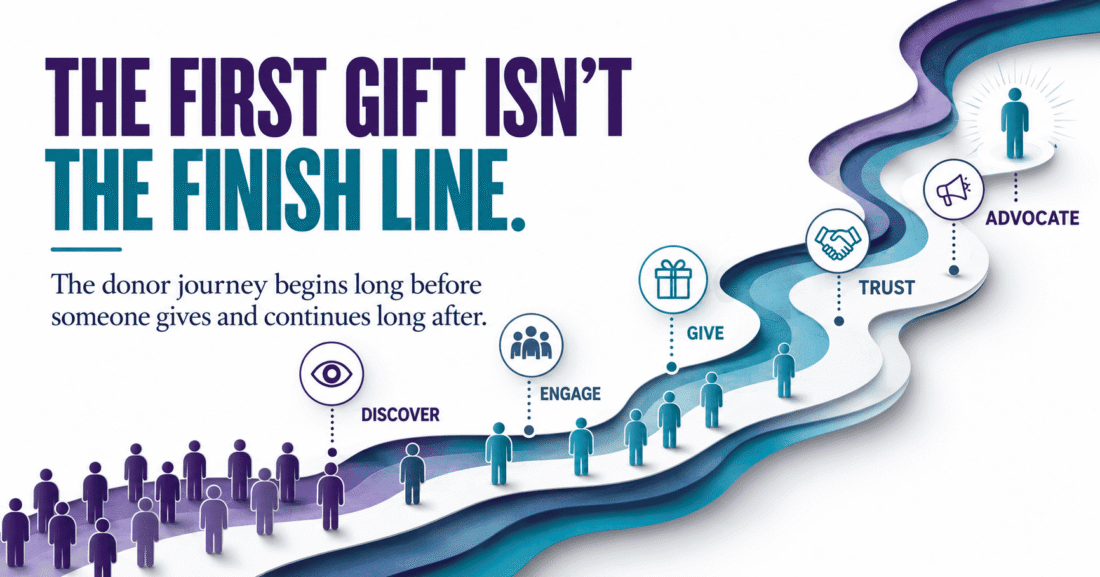
That is where the donor journey comes in. It is the full experience a person has with your organization, from initial awareness and engagement through giving, stewardship, and continued involvement.
What A Donor Journey Includes
A donor journey is not a fundraising strategy. A donor journey is the experience someone has with your organization over time. It begins before they ever make a gift and includes every interaction with your mission, services, staff, volunteers, leadership, communications, and community. Deciding how donors are engaged is not simply a fundraising responsibility; it is an organizational one.
For some people, the journey begins with a social media post. For others, it starts by volunteering, attending an event, accessing a service, joining a community conversation, or hearing about your work from someone they trust.
A donation is one moment within that larger relationship. The challenge is that organizations can unintentionally treat the gift as the destination rather than one step in an ongoing journey.
Why Donor Journeys Matter Now More than Ever
Across Canada, charities are being asked to do more with fewer resources. Fundraising teams are managing donor relationships alongside communications, events, grant applications, reporting requirements, and organizational priorities. It is a lot to hold at once.
At the same time, donor retention remains a sector-wide challenge. Keeping existing donors engaged is more sustainable than continually replacing those who leave. CanadaHelps identifies timely acknowledgement, meaningful communication, and impact reporting as important parts of donor stewardship and continued engagement.
This is why the donor journey matters. It shifts attention away from a series of separate fundraising activities and toward the overall experience supporters are having with the organization.
What Donor Retention and Campaigns Teach Us
In our recent article on first-time donor retention, we explored a simple but important reality: the problem is not always securing the first gift. The greater challenge is giving someone a reason to make a second one.
Adding more donors at the top of the funnel does little if existing supporters are quietly leaving through the bottom. Organizations can find themselves continually replacing relationships rather than building on them.
We reached a similar conclusion in our discussion about what makes a fundraising campaign successful. Strong results rarely come from a single campaign, event, or appeal operating on its own. They emerge when fundraising activities connect with organizational priorities, communications, and relationship-building.
The donor journey is where those elements come together.
Why Is Trust Important in the Donor Journey?
When organizations think about fundraising, they often focus on donations. Donors experience something broader: whether they trust the organization and feel connected to its work.
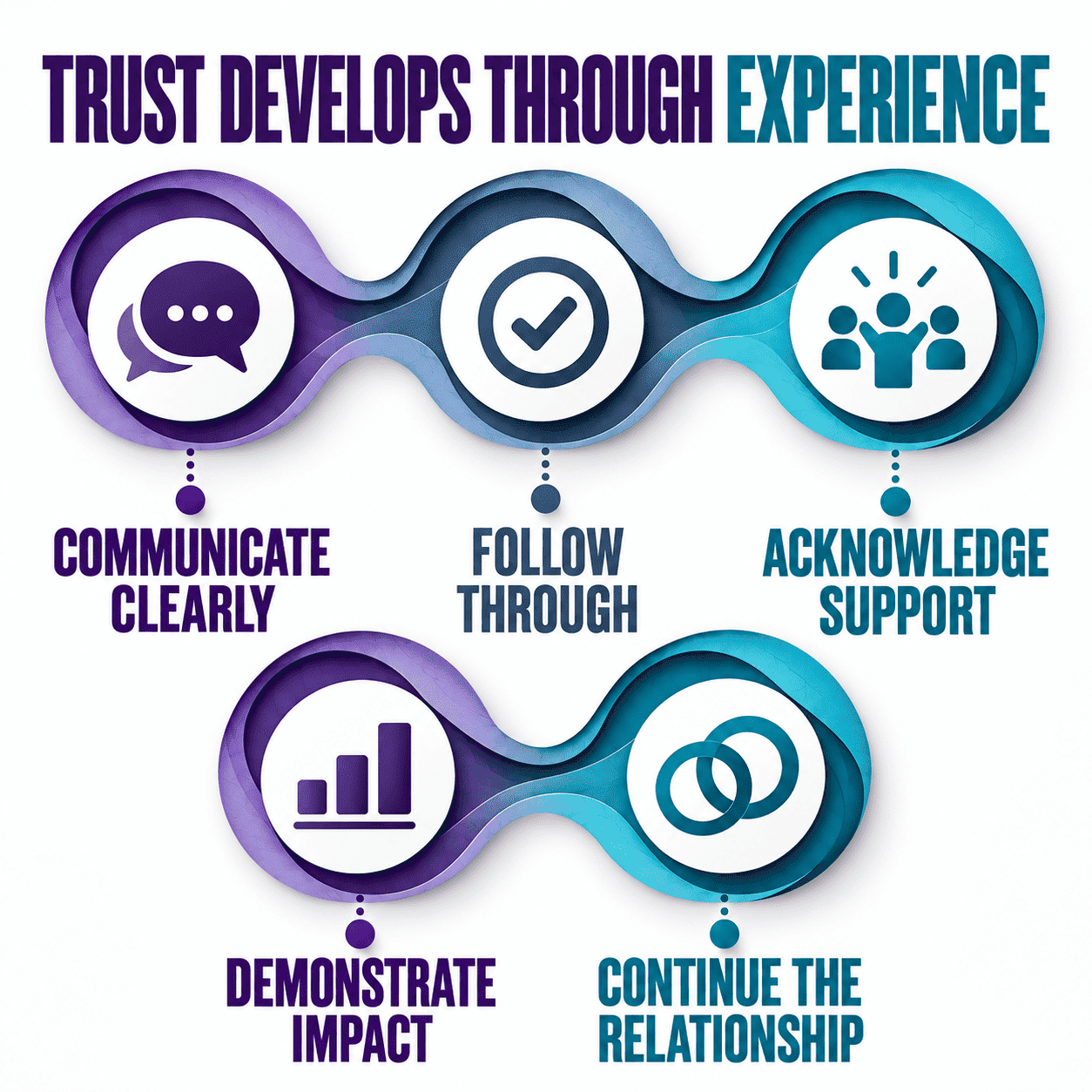
That trust develops through experience:
- Did the organization communicate clearly?
- Did it follow through on what it promised?
- Was the donor’s support acknowledged appropriately?
- Did the organization demonstrate the impact of the gift?
- Did the relationship continue after the donation was received?
CanadaHelps identifies acknowledgement, personalized communication, and impact reporting as important elements of donor stewardship and long-term engagement. Donor retention is therefore not only about fundraising. It depends on how consistently the organization manages the relationship and whether each interaction strengthens or weakens the donor’s connection to the mission.
Why Organizations Struggle with the Donor Journey
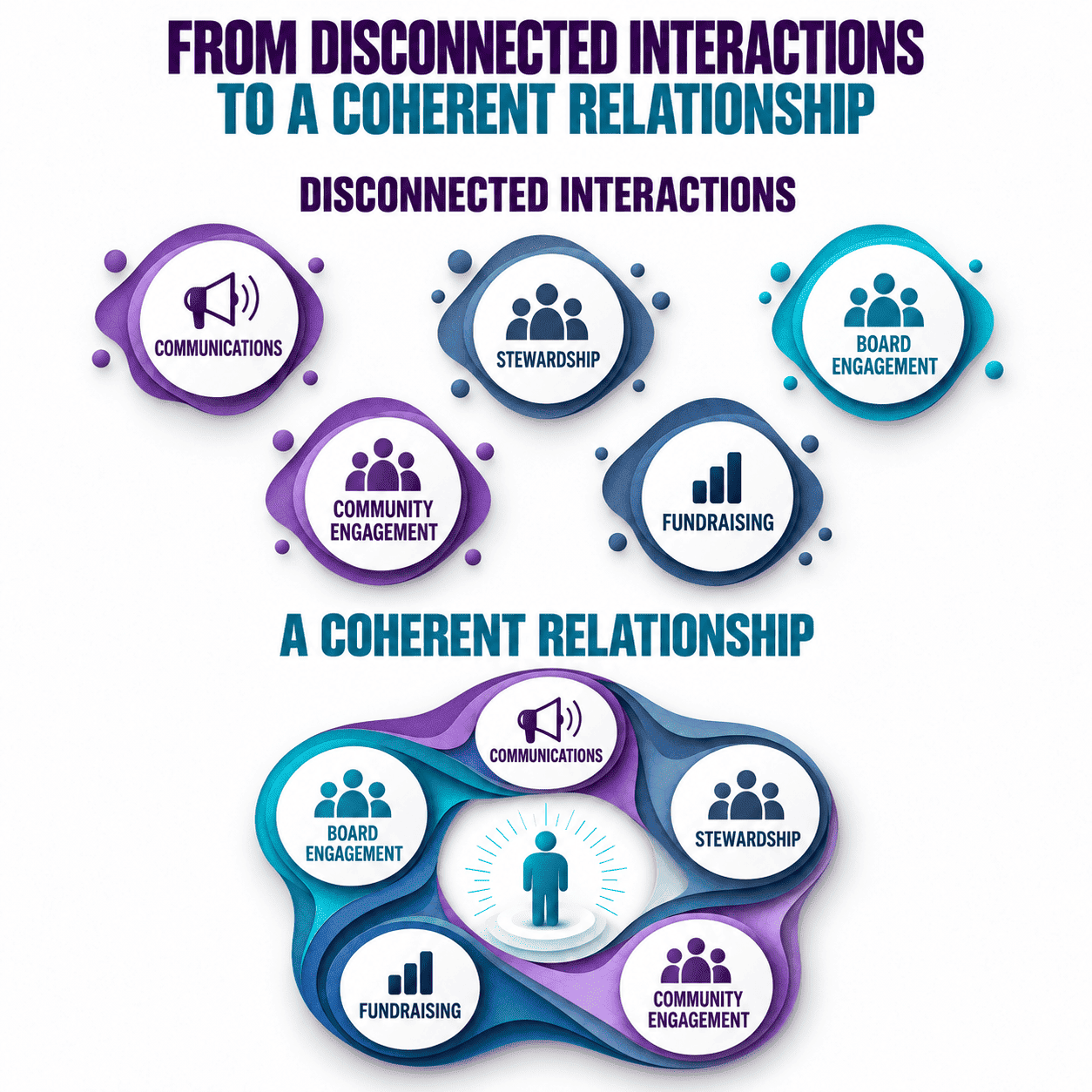
Most organizations do not lack commitment. What they often lack is capacity. Communications, stewardship, board engagement, community engagement, and fundraising are all taking place. The difficulty is that these activities are often managed separately. Instead of experiencing a coherent relationship, donors encounter a series of disconnected interactions.
This is especially challenging for smaller charities, foundations, and advancement teams, where several responsibilities may be shared among a small number of people. When fundraising, communications, stewardship, grants, and reporting operate as separate functions, it becomes difficult to maintain consistency or make deliberate decisions about how the relationship should move forward.
As we discussed in Before You Start Fundraising, Ask If You’re Ready, stronger fundraising depends on organizational priorities, responsibilities, and activities being aligned. The donor journey makes the effect of that alignment, or its absence, visible to the people engaging with the organization.
How Communications Shape the Donor Journey
Donor relationships do not exist in isolation. They are part of a broader network of relationships that includes volunteers, partners, alumni, community members, staff, and board members. Each group experiences the organization differently.
When communication is intentional, people have opportunities to provide feedback, understand outcomes, and participate in meaningful ways. These experiences can strengthen trust across the organization’s community and make fundraising easier.
That does not happen because people are asked to give more often. It happens because they have a clearer understanding of the mission and the role they can play in advancing it.
Many organizations ask: “How do we get more donors?”
A more useful question may be: “What experience are people having when they engage with us?”
That question shifts attention from transactions to relationships. It encourages organizations to consider stewardship before solicitation, engagement before campaigns, and community before revenue. Most importantly, it helps clarify which activities are moving relationships forward.
How Can a Donor Journey Strengthen Fundraising?
A donor journey is not simply a marketing funnel, a campaign calendar, or a fundraising tactic. It is the cumulative experience of having a relationship with your organization.
When organizations understand that experience, they often discover that stronger fundraising does not necessarily require more activity. It requires greater clarity about which relationships matter, which interactions build trust, and how communications, stewardship, and engagement work together.
That clarity helps move supporters from initial awareness toward deeper involvement and advocacy. It also gives the organization a stronger foundation for sustainable growth.
If you would like to examine how communications and community engagement are shaping relationships within your organization, complete the free self-assessment. It takes approximately 10 minutes, and your responses are used to prepare a tailored report.
AI Transparency Statement: AdvanceU 1st Consultants used generative AI to assist with research, organization, drafting, and editing of this article. All professional insights, interpretations, recommendations, and final editorial decisions reflect the expertise and judgement of AdvanceU.