


You need proof, not promises.
These are four organizations that came to us with real pressure, limited runway, and no shortage of effort.
Here's what changed
for them.
Case Study One
The situation. A national settlement services organization had operated for years on grant funding. The mission was clear. The community need was real. The leadership was capable and committed.
What it did not have: a donor base, a CRM, fundraising policies, charitable status, or any philanthropic infrastructure. The conditions for sustainable revenue had never been built. Every year, the organization rebuilt its funding from scratch.
What we did. AdvanceU delivered a 26-page five-year Revenue Generation Plan built from zero. The work included an environmental scan with six comparator organization interviews, a full organizational assessment, CRM and governance recommendations, a CASL compliance framework, a donor engagement matrix, and a corporate screen methodology. Two revenue scenarios were modeled for the board.
We also advised on charitable status. The board approved the application mid-engagement.
What changed. The five-year fund development roadmap was adopted. Charitable status was approved. The infrastructure for sustainable fundraising was in place for the first time. The revenue model projected fund development to match grant revenue within seven to eight years, with transformational gifts projected by Year 10.
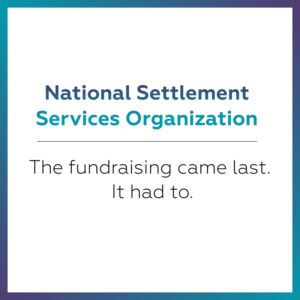
The fundraising came last. It had to.
Case Study Two
The situation. A national advocacy organization working in racial equity and economic justice had real community momentum, a national profile, and approximately 600 existing contacts. It had launched in 2017 with mission urgency and public visibility.
What it did not have: charitable status, a donor engagement framework, a corporate screen, or a structured pathway to convert community support into sustained philanthropic revenue. The capacity to give existed in the community. The organization was not positioned to receive it.
What we did. AdvanceU delivered 16 formal recommendations across eight areas of focus and 11 new resources. The work included a donor engagement matrix, a corporate screen model, a sponsorship asset management framework identifying 11 opportunities valued at $28,500, a major gift prospect review, a fundraising priority brief, and a charitable status reapplication package built and ready for board ratification.
Findings were presented directly to the Board of Directors.
What changed. A complete three-year Annual Engagement and Development Plan was adopted. $28,500 in immediate sponsorship opportunities was identified and structured. The donor base growth trajectory was modeled to 770 to 1,000 donors by Year 3, positioning the organization for a Major Gifts program launch.
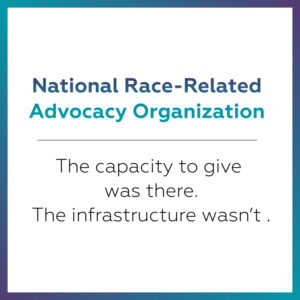
The capacity to give was there. The infrastructure wasn’t.
Case Study Three:
The situation. A growing private university in British Columbia lacked scalable systems connecting student experience, alumni engagement, and career development. Alumni Engagement had no formal plan, no data protocols, and no CASL compliance. Student Life had no structured assessment or leadership framework.
The institution was building momentum. It did not yet have the infrastructure to sustain it.
What we did. AdvanceU delivered four interconnected projects over three years: an Alumni Engagement Services three-year strategic plan, AES capacity building and team restructuring including revised job descriptions, a CASL framework, an Alumni Data Book, and a communications calendar. We also provided Student Affairs strategic support including a leadership coaching program, and a Student Life assessment producing nine recommendations and five programming areas of focus.
What changed. 64 distinct resources delivered across four project phases. An Associate Director was recruited and onboarded during the engagement, ensuring leadership continuity. Consistent data practices were established across Alumni Engagement and Student Life, built for CRM adoption. When financial pressures hit, signature programs were maintained through a Minimum Viable Programming model. A Career Collaboration Framework was developed integrating alumni engagement and career development.
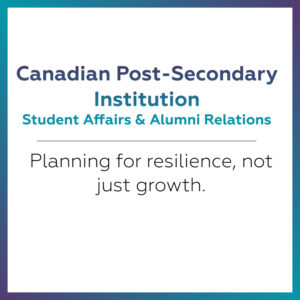
Planning for resilience, not just growth.
Case Study Four:
The situation. A teaching university faced an unplanned VP Advancement departure with no succession strategy and no continuity plan. The Advancement department was mid-cycle with active major gift prospects in cultivation. The risk was not just operational. It was relational.
What we did. AdvanceU placed an interim VP Advancement to stabilize department operations, maintain active donor relationships, and sustain the cultivation strategies already in motion. We documented systems and processes to prepare the institution for incoming permanent leadership, ensuring nothing built during the transition was lost.
What changed. The institution secured its first 7-figure philanthropic gift during the engagement. Advancement infrastructure was stabilized and fully documented through the transition. The incoming VP began at full capacity, not from zero.
Continuity is a strategy. Most organizations only understand that after they lose it.
We have sat where you sit. That changes everything about how we work.
We built AdvanceU because we have been the client. We know what it feels like when a consultant puts your context into their box.
We listen first. We build for your organization, not ours. Our experience across fund development, governance, alumni engagement, and organizational strategy means we see your problem from multiple vantage points before we offer a single recommendation.
That is the difference.
We bring 45 years of experience, capital campaigns exceeding $200M, and recognition across the sector for work that actually changed something.
Have a specific question?
If you have a question, or are working through a decision, ask away. We have a lot resources, tips, and frameworks to help you understand, decide what works for you, and take action.
Please reach out.
Prefer to talk it through?
Not sure what comes next?
If you are just a bit overwhelmed, AdvanceU can help, so feel free to reach out. We can start with a conversation about where you are now, what you are trying to accomplish, and what kind of support would be useful.
Book a 30 minutes conversation on us.
Testimonials
We’ve worked with organizations navigating growth, complexity, and pressure to deliver.
The challenge isn’t a lack of ideas. It’s knowing what to prioritize and what to stop.
That’s where clarity creates momentum.
We had Pommashea Noel-Bentley come and work as our Interim Vice President External Relations during a time of transition for St. Mary’s University.
She jumped in with both feet, bringing a wealth of knowledge and setting strategic direction for our campus and the team. From fund development and rolling out our new strategic plan to planning a major new event, she brought a smart, purpose-driven, people-focused approach that enhanced our entire operations.
The systems and processes she put in place built our capacity in the entire suite of the External Relations portfolio, capacity that will enhance our campus for years to come.
We had the pleasure of working with AdvanceU 1st Consultants to help us develop CASSA’s first Sustainability Strategy. AdvanceU went above and beyond expectations.
They ensured they met all of our needs, took the time to help us understand their recommendations, and continued to provide us with ongoing support. They are very knowledgeable about fundraising, government legislation for non-profits and charities, and the philanthropic landscape.
In our experience, AdvanceU is committed to their clients success and has offered us more than we paid them. Scott and Pommashea are amazing!
Working with AdvanceU1st Consultants has been an exceptional experience that has significantly advanced our university’s engagement efforts. Their ability to engage in strategic planning and build capacity in our advancement initiatives is remarkable.
The well-structured organizational framework developed for our alumni engagement efforts has already begun to yield significant results, laying a strong foundation that will benefit our university for years to come. The value added by the entire AdvanceU1st team is evident in every aspect of our advancement and engagement operations, from strategic planning to day-to-day processes.
Their unwavering commitment to our success and the meticulous handoff processes they implemented have ensured that we continue to thrive and grow long after their direct involvement.