


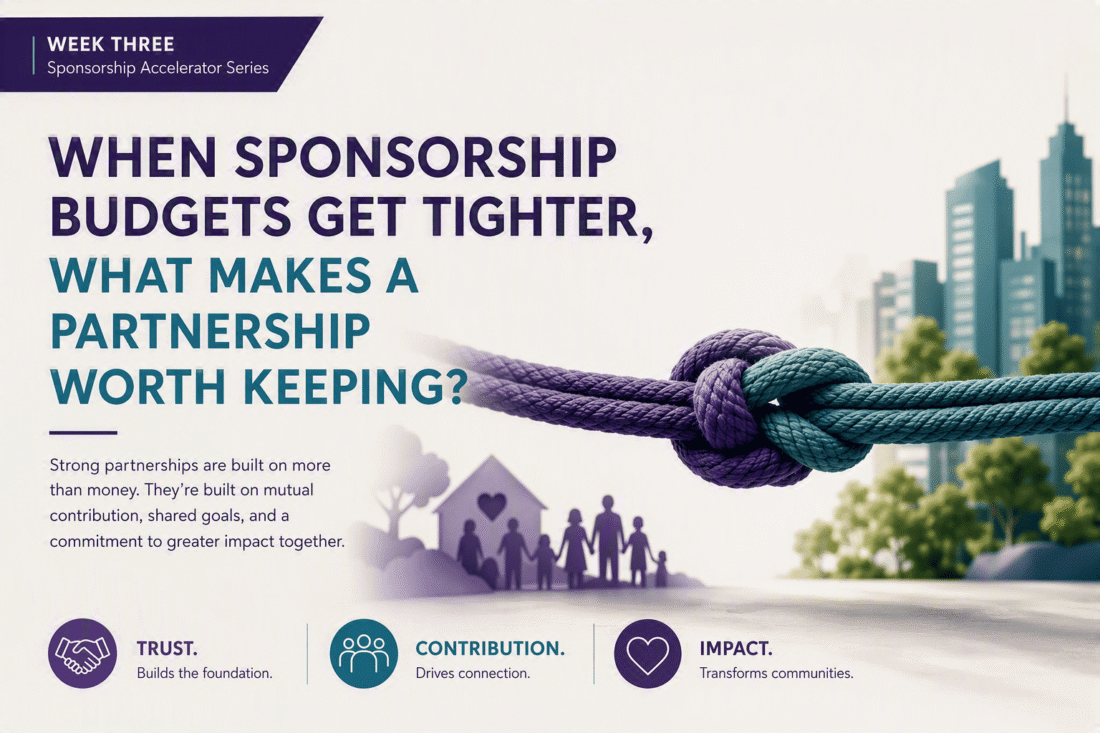
When Sponsorship Budgets Get Tighter, What Makes a Partnership Worth Keeping?
Last week, we explored what creates sponsorship value. Logos, event banners, and social media mentions may be part of an offer, but the value comes from the audiences an organization can connect with, the assets it can responsibly provide, and the opportunity it can build with the right company. Trust and respect are the foundation that allows those elements to become part of a credible relationship.
Once both parties understand the value the organization brings, the next question is unavoidable: What will each party contribute to make the sponsorship work?
That question feels especially important today. Both parties need to be clearer about what they can contribute, what they actually need, and what they can realistically deliver. A partnership is not worth keeping simply because each side brings something to the table. Those contributions need to help both organizations achieve something they value together.
Across Canada, charities and post-secondary institutions are navigating growing uncertainty. Recent trade tensions between Canada and the United States, including tariffs implemented on August 22, have created new pressures for many businesses as they assess costs, investments, and priorities for the months ahead. Many nonprofit leaders are understandably asking whether sponsorship investments will continue. It is a fair question.
But perhaps it is not the most important one. History shows that during periods of uncertainty, strong partnerships do not disappear. Instead, both sides become more thoughtful about where they invest their time, resources, and energy.
That is why this may be the moment to stop asking: How much funding can we secure?
And start asking: How can we create the greatest impact together to attract the funding we want?
Sponsorship should never be a one-sided transaction. At its best, sponsorship is a partnership built around mutual contribution, shared objectives, and meaningful outcomes. That is where resilient sponsorship relationships begin.
Why Community Needs Continue When Sponsorship Budgets Tighten
The organizations we work alongside understand something important. Economic uncertainty does not reduce community needs. Families still need support. Students still need opportunities. Community organizations still require resources. Research, education, health, arts, sport, and social services continue to matter. In many cases, demand increases precisely when economic conditions become more difficult.
Businesses are navigating uncertainty too. Rising costs and changing priorities may lead them to reassess budgets and examine investments more carefully. Both realities belong in the sponsorship conversation.
The challenge is ensuring sponsorship conversations reflect both perspectives. The strongest partnerships recognize that community organizations and businesses are facing uncertainty together. They approach sponsorship not as a funding request, but as a shared opportunity to create value and impact.
What Can Sponsors Contribute Beyond Money?
Funding is important. Programs need resources. Events require support. Growth often depends on investment. None of that changes with external factors like the economy, it just heightens any gaps.
What can change is our understanding of contribution. Too often, sponsorship conversations become narrowly focused on financial support. The sponsor provides money. The organization provides recognition. End of discussion.
Yet some of the most valuable sponsorships are built around contributions that extend far beyond the financial investment itself.
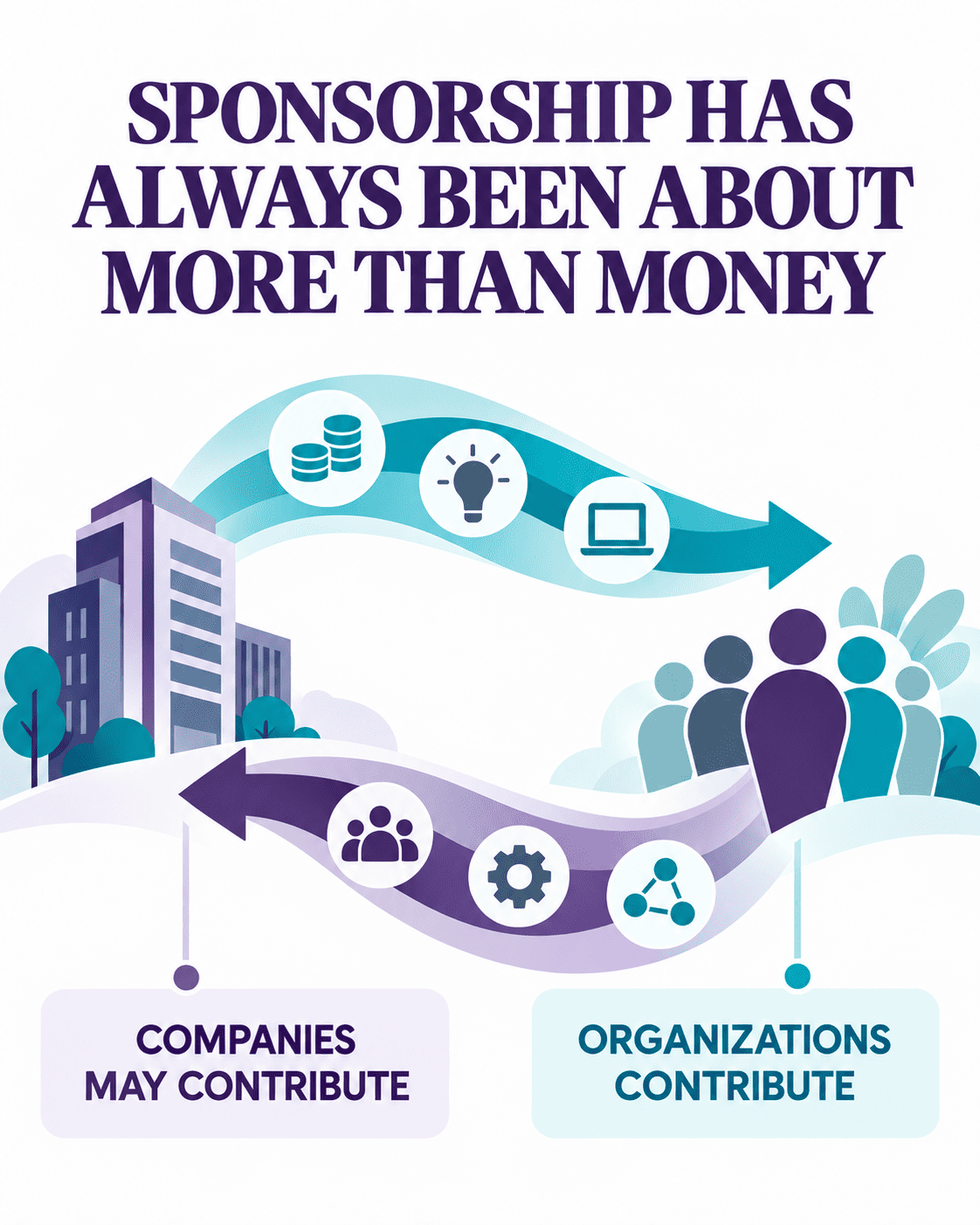
Companies may contribute:
- Professional expertise
- Industry knowledge
- Technology
- Employee volunteerism
- Communications reach
- Products and services
- Strategic introductions
- Access to networks and relationships
Meanwhile, organizations contribute:
- Community trust
- Audience relationships
- Meaningful engagement opportunities
- Mission expertise
- Credible social impact
- Community insight
- Authentic storytelling
- Shared purpose
When we focus only on dollars, we often overlook the very contributions that make a sponsorship successful.
What Do Sponsors Expect From Nonprofit Partnerships?
Nonprofits understand stewardship. Every dollar matters. Every volunteer hour matters.
Every relationship matters. Companies have stewards too. Corporate leaders are accountable to employees, shareholders, customers, boards, and communities. They are increasingly expected to demonstrate why community investments matter and what outcomes they create. Research across Canada’s sponsorship sector continues to show growing emphasis on accountability, audience alignment, measurable outcomes, and strategic value.
That should not worry nonprofits. It should encourage them, because organizations that can clearly articulate their impact, understand their strengths, and communicate what they contribute to a partnership are often better positioned to attract and retain sponsors who can be partners. Mutual respect grows when both parties recognize and value what the other brings to the relationship.
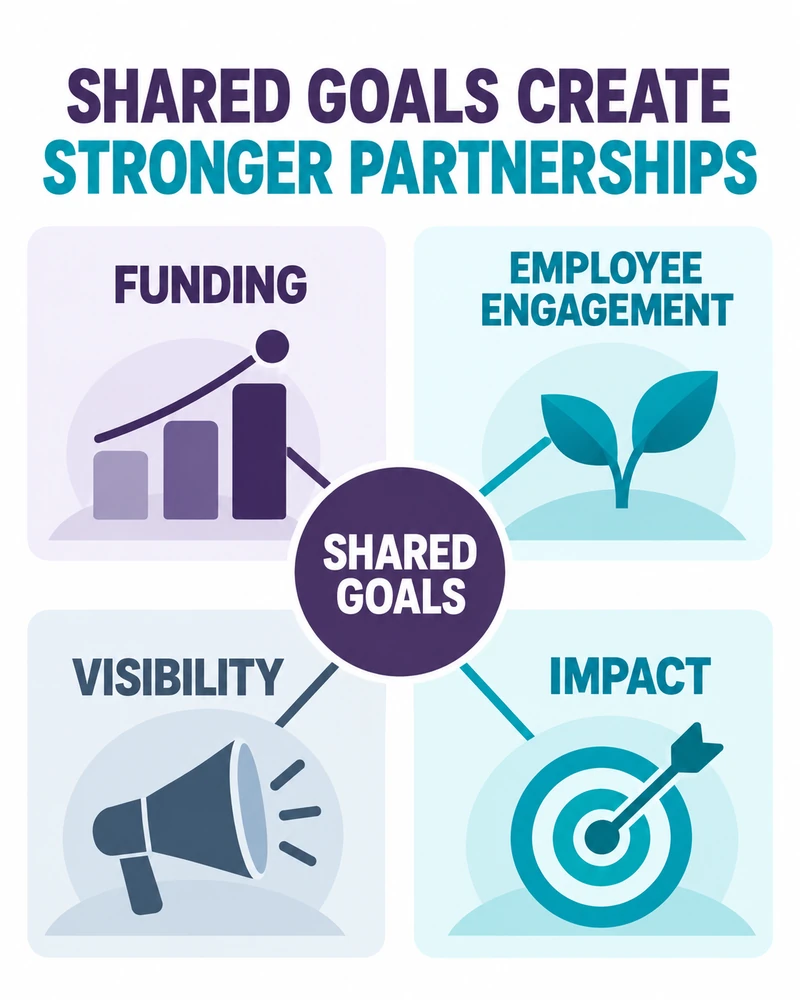
When sponsorship relationships struggle, it is often not because either partner lacks commitment. More often, the challenge is a lack of clarity and alignment. The nonprofit may be focused on funding. The sponsor may be focused on employee engagement. Leadership may be focused on visibility. And the community may be focused on impact. None of these priorities are wrong.
The problem emerges when they are never discussed. Shared goals bring clarity and help to determine which contributions matter most. Shared goals guide decisions. Shared goals create resilience when circumstances change, especially in challenging or uncertain economic times. When goals are clear, sponsorship becomes more than a transaction, it becomes a partnership in action.
What Questions Should Nonprofits Ask Corporate Sponsors?
f your organization is pursuing sponsorship in today’s environment, this may not be the moment to narrow the conversation to sponsorship dollars alone. It may be the moment to broaden it.
Ask:
- What challenges are our corporate partners facing?
- What community priorities remain important to them?
- How does our mission help advance those priorities?
- What support beyond funding could create meaningful value
- What outcomes would benefit both partners?
- How can we make participation easier and more impactful?
These questions are part of a responsible corporate screen and often reveal opportunities that neither organization may have initially considered. More importantly, they help build relationships that are capable of adapting, growing, and enduring through changing circumstances.
How Do You Build a Strong Sponsorship Partnership?
There are questions that rarely appear in sponsorship packages. Yet, they are often the questions that determine whether a sponsorship becomes a lasting partnership or simply a short-term transaction.
Even before sponsorship levels are created, a proposal is written, and funding amounts are discussed, there is an important set of questions that deserves attention.
What are we trying to achieve together?
What support would genuinely help create impact?
What can each of us contribute?
How do we strengthen communities while helping both organizations achieve meaningful outcomes?
The organizations that build the strongest sponsorship relationships are not necessarily those with the biggest audiences, largest events, or highest profile. They are the organizations that understand their strengths, recognize their limits, and approach sponsorship as a partnership grounded in trust, respect, and shared purpose. These qualities matter in every economic environment. In today’s economic uncertainty, they matter even more.
When Sponsorship Budgets Tighten What Comes Next
Understanding what each party contributes is only one part of sponsorship readiness.
When budgets tighten, the next step is not automatically to reduce the ask, add more benefits, or accept whatever else is offered. It is to understand what has changed, decide what still creates value, and be realistic about what both organizations can deliver.
Sponsorship planning can help charities and smaller post-secondary advancement teams examine five essential dimensions of sponsorship readiness:
- Alignment and boundaries;
- Audiences, assets, and offers;
- Partner fit and decision-making;
- Activation and delivery; and
- Results and relationships
This may lead to a different mix of financial and non-financial support. It may require a more focused activation plan, clearer evidence of results, or an honest conversation about whether the partnership still fits.
The strongest partnerships are not protected from change. They are able to work through it.
Transparency Note: AdvanceU 1st Consultants used generative AI to support the research, organization, drafting, and editing of this article. The perspective, professional experience, analysis, and final editorial decisions are ours. Research claims and sources were reviewed before publication.