


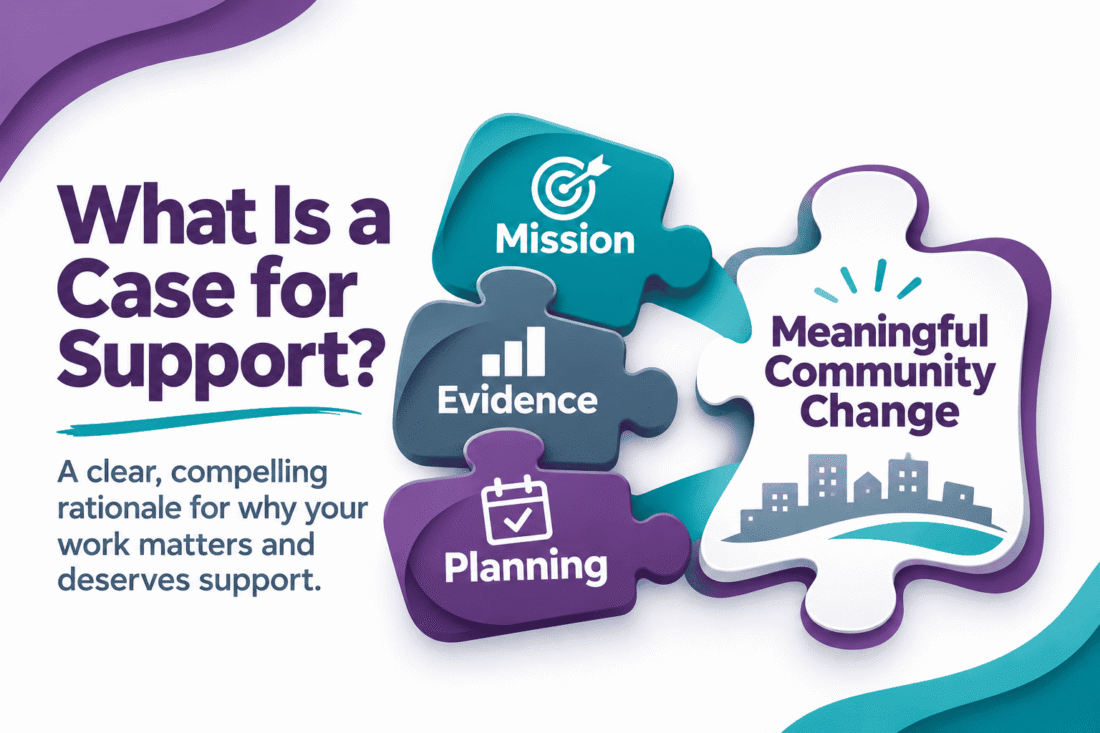
What Is a Case for Support? Why Charities Need One
People who work in charities generally do so because they believe in the mission and the change their organization can create. We see the work firsthand. We know the programs, the people involved, the challenges and the successes. Over time, that knowledge becomes so familiar that it’s easy to assume everyone else understands the organization just as well as we do.
In many ways, we’ve drunk our own Kool-Aid.
The problem is that donors just don’t have the same view. They may know the organization’s name, have attended an event, or even contributed financially, but that doesn’t mean they understand how the work connects to the mission or what their support makes possible. We sometimes assume that the language we use internally, the programs we deliver, and the results we see are readily understood by the people we’re asking to support us. Often, they aren’t.
This is one of the reasons developing a Case for Support is so important. It provides an opportunity to examine what the organization is trying to accomplish, bring together the perspectives of the people responsible for that work, and develop a shared understanding of why philanthropic support matters.
What Should a Case for Support Include?
A Case for Support is more than a fundraising document. It is an organization’s reasoned argument that can compel people support this mission. It explains the need or opportunity being addressed, why it matters now, what the organization intends to do, what resources are required, and how that work contributes to meaningful change. And, just as importantly, it connects those elements to a reason for donors and funders to participate.
In my experience, organizations often approach case development as a writing exercise. We have a strategic plan, perhaps some successful grant applications, program reports, and a collection of stories. The assumption is that these materials can be assembled into a polished fundraising document. While those resources may contain much of the information we need, they don’t necessarily provide a coherent argument for support.
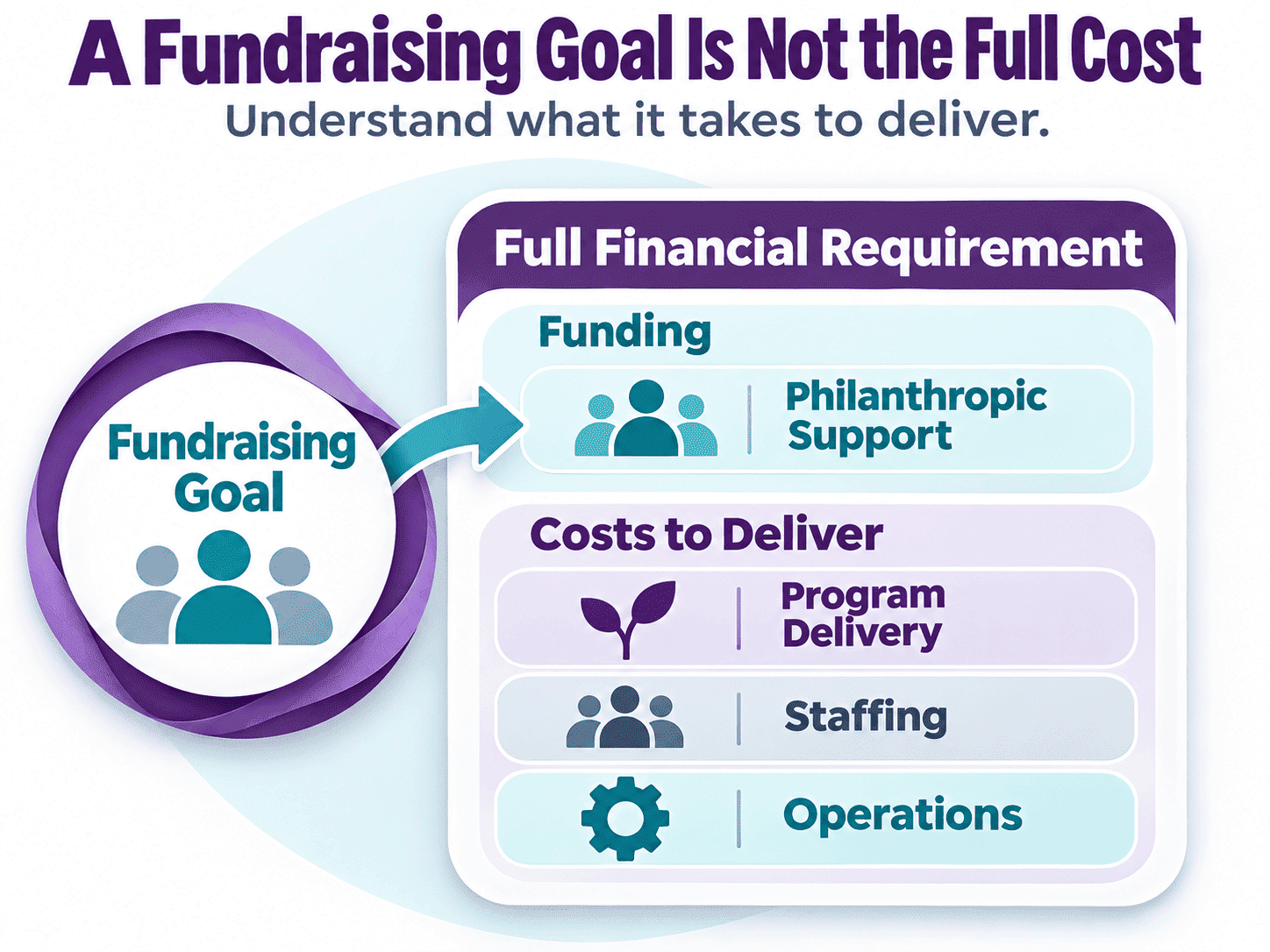
The process of developing a case requires the organization to examine the information, resolve differences in understanding, and establish what it can credibly communicate. This is not solely the responsibility of the fundraising function. For example, a strategic plan may identify organizational priorities, but it doesn’t always explain which priorities require philanthropic support or what that support will accomplish. Similarly, a fundraising target identifies how much money an organization hopes to raise without necessarily explaining the full cost of the work or its intended outcomes.
There is also an important difference between recognizing that work needs funding and being organizationally ready to fundraise for it. Leadership may agree that a program should expand, but if the costs, delivery responsibilities, or longer-term plans are unclear, developing the case may reveal decisions the organization needs to make before it approaches donors. This matters because donors aren’t simply being asked to support an organization. They’re being invited to contribute to a future they believe is worth creating.
How Do You Make a Case for Support Compelling to Donors?
The mission is the reason. Program are how we get there. Consider a charity providing employment services to people experiencing homelessness. The organization may describe its work through the number of participants enrolled, the training delivered, or the employment services provided. These are important measures, and they help demonstrate the work taking place. However, the real purpose extends beyond delivering those services. The organization is helping people move toward greater independence and more stable living conditions. Thus, a meaningful story might follow someone who entered the program underemployed or without stable housing and, through the opportunities and support available, began to change their circumstances. Their experience helps others understand what the work made possible and why that change matters.
When an organization develops its Case for Support, it needs to make that connection clear. The need, the proposed response, the evidence, and the personal experiences should all contribute to explaining the change the organization is trying to achieve. This doesn’t mean every fundraising message needs an emotional story. It means the stories an organization choose should be relevant, authentic, and supported by what is actually happening.
What matters to donors is often much closer to the mission than to the individual programs an organization delivers. In Imagine Canada’s 2026 research into what Canadians consider when supporting charities, personal connection to the cause and the belief that a charity benefits the local community were among the most frequently identified considerations. That makes the connection between a person’s experience, the organization’s work, and the change being achieved especially important. The story needs to help donors understand the difference their support can make, not simply tell them what services the organization provides.
These findings don’t suggest that a compelling story or a well-written case will automatically increase donations. They do, however, reinforce the importance of explaining how the mission translates into meaningful change. A donor may develop a strong relationship with a particular charity, but what gives that relationship meaning is the opportunity to contribute to something they believe in. A Case for Support helps make that connection understandable.
Who Should Be Involved in Developing a Case for Support?
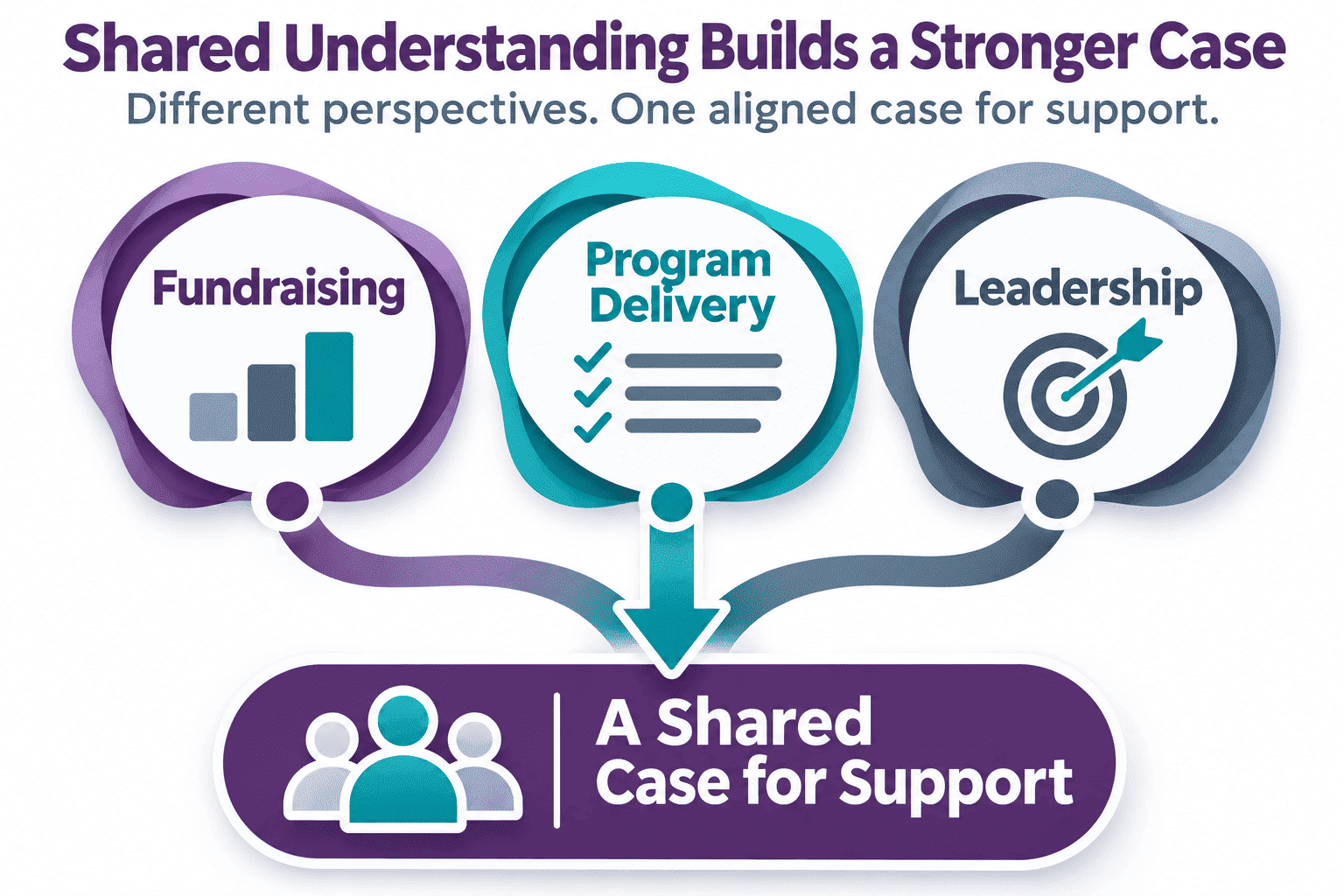
Developing a shared understanding positions your charity for success. One of the challenges charities face is fundraising is often treated as the responsibility of the fundraising team rather than something the organization must support collectively. A fundraiser approaches the work from the perspective of engaging donors and generating philanthropic support. A program supervisor understands the day-to-day realities of service delivery, the people involved, and the outcomes being achieved. Executive leadership brings an understanding of organizational priorities and available resources, while the board has responsibilities for direction, governance and accountability.
All of those perspectives matter.
When they remain disconnected, organizations can find themselves communicating different versions of the same initiative. One person emphasizes the program, another focuses on the funding requirement, and someone else describes the broader mission. Each may have an accurate perspective, but none necessarily represents the complete picture. That can create disconnect for donors. Developing a Case for Support creates an opportunity to bring those perspectives together and establish a more comprehensive and shared understanding of the work, its intended outcomes, and how philanthropic support contributes to achieving them.
This involves more than agreeing on terminology. It requires examining the underlying priorities, plans, evidence and assumptions so that the people involved understand what the organization is trying to accomplish and how it intends to get there. A fundraiser will naturally approach this work as a fundraiser. A program manager will see it from the perspective of delivering services. Neither should be expected to understand everything the other knows, which is precisely why both perspectives are needed. Shared understanding is developed through those conversations, not by asking everyone to repeat a message written by one department.
The benefit is that when a donor speaks with a board member, fundraiser, or program employee, the conversation is grounded in the same organizational understanding, even though each person may approach it from a different perspective. That shared understanding also makes it easier to identify useful stories and meaningful measures of impact without creating additional work simply for the sake of fundraising communications.
What Makes a Strong Case for Support?
Credibility comes from understanding what you can deliver. For smaller charities, demonstrating evidence and impact can feel overwhelming. Employees are already managing programs, meeting grant requirements, supporting community members, and responding to immediate operational needs. Creating an entirely new measurement system may not be realistic.
Smaller charities don’t necessarily need sophisticated evaluation systems to demonstrate meaningful results. Research from Carleton University’s Charity Insights Canada Project found that 81 per cent of surveyed charities measure impact in some form, frequently relying on questionnaires, existing service access, or outcome records. The findings reinforce an important distinction: measuring impact is also about learning and accountability, not simply proving that an organization caused a particular result. For a smaller charity developing its Case for Support, the opportunity is to make better use of the evidence it already collects rather than creating another reporting obligation.
Much of the information required to support a credible case may also already exist in program reports, grant reporting, financial records, service statistics, and the employee knowledge / perspective in the delivery of the work. The challenge is determining what that information can reasonably demonstrate.
An organization may not be able to attribute every result to a particular donor or fundraising priority. It may be more appropriate to explain what was achieved through the combined support of philanthropy, grants, volunteers, and other resources. What matters is being truthful about what has been accomplished, what the organization expects to achieve, and what remains uncertain.
That same responsibility applies to financial requirements. If a charity announces that it needs to raise $250,000, donors should be able to understand what that amount represents. Is it the full cost of the proposed work or the portion requiring philanthropic support? What other funding is available? Does the budget account for staffing and operating requirements? If the initiative is intended to continue, what happens when its initial funding ends? An organization doesn’t need every future detail resolved before seeking support. It does need to understand the financial and operational commitments involved, what additional funding will make possible and whether it has the capacity to deliver.
The CRA’s fundraising guidance reinforces the importance of this planning. Good financial management builds donor trust because it demonstrates that the organization understands what it is committing to deliver, beyond simply reaching a fundraising target. Many smaller charities depend on grants and contracts because those funding arrangements are familiar. They have established processes, reporting requirements and, in some cases, provide a degree of predictability that organizations with limited resources understandably value.
How Does a Case for Support Help Build Donor Relationships?
Moving from transactional to relational fundraising. Developing relationship-based fundraising can seem risky by comparison. It requires investment, employee capacity, and time to build relationships that may not produce immediate financial returns. There is also a genuine concern about how an organization can sustain its existing work while developing another approach to revenue generation. But depending too heavily on restricted or short-term funding can limit flexibility. It can create pressure to pursue available funding rather than the priorities that most directly advance the mission.
The opportunity isn’t to replace grants. It’s to develop philanthropic relationships that complement existing revenue and create greater opportunities for sustainable growth in pursuit of achieving the mission. This requires a fundraising strategy grounded in deliberate choices about revenue sources, relationships, and organizational capacity, rather than one that keeps getting replaced by the next urgent funding opportunity. A Case for Support helps give those choices direction by connecting the funding priorities to the mission and the change the organization intends to achieve.
An important part of the transition is moving from transactional to relational fundraising. A person may first connect with a charity by attending an event and making a donation. That transaction can be the beginning of a relationship, but only if the organization takes the time to understand why the person gave, what matters to them, and how they prefer to participate. Someone may have a personal connection to the cause because a family member has experienced the challenges the charity addresses. Another donor may care deeply about a particular change they want to see in their community. Some prefer occasional telephone conversations, while others want updates by email or opportunities to see the work firsthand. Understanding those preferences allows the organization to engage people in ways that are meaningful to them rather than treating every donor as another name on a mailing list.
Over time, meaningful communication, evidence of impact and recognition of the donor’s contribution can create reasons for continued involvement. Donors can see how the work is progressing, how their support contributes, and what opportunities exist to remain part of the mission.
This is where a Case for Support becomes particularly valuable. It gives the organization a consistent foundation for those conversations, helping donors see how their involvement connects to the mission, and the future they want to help create. Relationship-based fundraising takes time to develop, and its financial results cannot be guaranteed in the near-term. However, building relationships rather than relying exclusively on individual transactions creates opportunities for ongoing support and a more sustainable approach to fund development.
How Do You Start Developing a Case for Support?
Developing a Case for Support doesn’t need to become an overwhelming exercise, particularly for charities already working with limited resources. A useful starting point is to examine three connected areas.
First, establish the need and its relevance. Understand the issue your organization is addressing, who is affected and why it matters. This includes considering how the priority connects to the mission and why action is important now.
Next, connect the fundraising priority to a credible response. Be clear about what the organization intends to do, what it will cost and what change can reasonably be expected. The priority also needs the appropriate organizational approval, resources and responsibility for delivery.
Finally, determine how results will be measured and communicated. Consider what information already exists, what additional evidence may be necessary and how credible stories can help explain the difference the work makes.
Working through these questions provides an opportunity to bring the organization’s knowledge together, identify what remains unresolved, and establish a shared understanding of what philanthropic support will make possible. It also creates an opportunity to test that understanding with people outside the organization. What seems clear to employees and board members may not make sense to or resonate with a donor hearing it for the first time. These conversations can reveal where the explanation needs work, what questions remain unanswered, and which parts of the argument people find meaningful.
The result should be more than a document that explains what your organization does. It should provide a practical foundation for fundraising conversations that connect the mission to the change donors want to support. For charities seeking to grow beyond familiar funding sources, that foundation can become an important part of building the relationships needed for scalable and sustainable fund development. And for donors, it provides something equally important: a clear understanding of the change their participation can help achieve and an invitation to be part of that journey.
Understand Where Your Organization Stands
If your organization is considering developing or strengthening its Case for Support, begin by examining what is already in place and which questions still need attention.
AdvanceU’s free Case for Support Sprint Self-Assessment helps you assess your fundraising priorities, supporting evidence, organizational readiness and donor engagement.
AI transparency: AdvanceU 1st Consultants developed the framework and guidance in this resource. We used generative AI to help organize the material and support drafting and editing. We refined and approved the final content, and the professional judgment and final editorial decisions are ours.