


Corporate Sponsorship Reputation Risk: Why Reputation Comes First
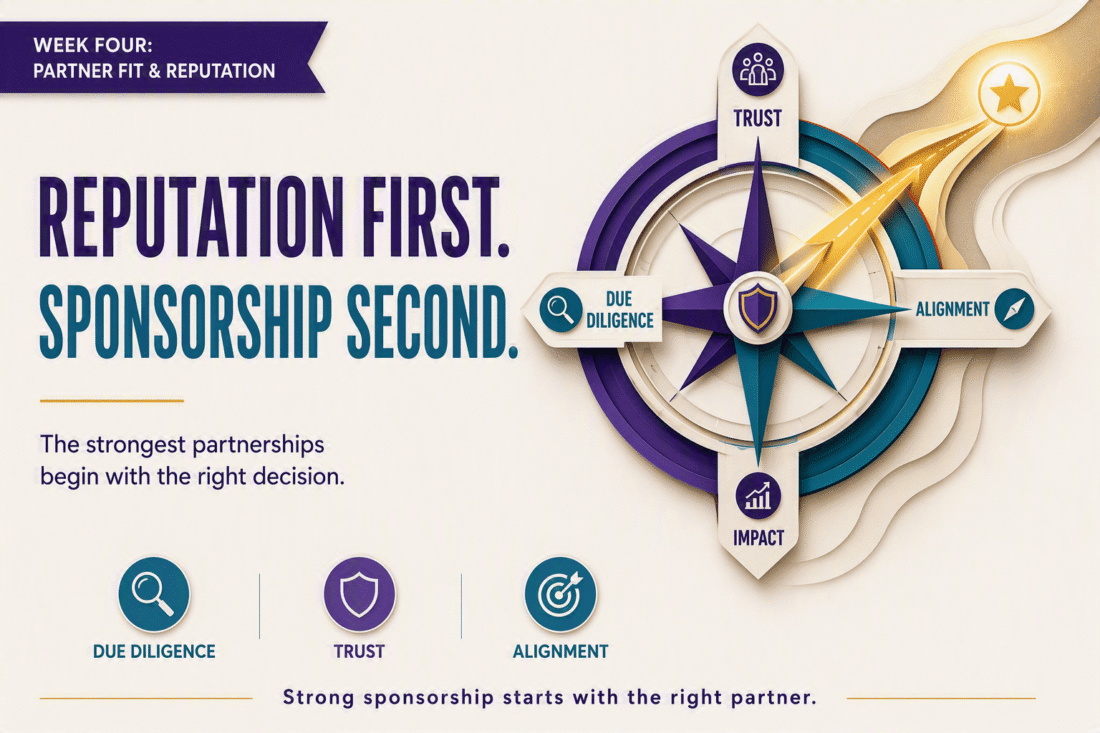
Reputation First. Sponsorship Second.
September is an important month for sponsorship.
Across Canada, companies are beginning to evaluate community investment priorities, partnership performance, and sponsorship budgets for the year ahead. Decisions made over the next few months will help determine which partnerships are renewed, expanded, paused, or ended in 2027. This year, many of those decisions are being made against a backdrop of economic uncertainty. Recent U.S. tariffs have added pressure to parts of the Canadian economy, forcing many organizations to look more closely at where every dollar is spent. Sponsorship and community investment budgets are no exception.
That reality makes sponsorship readiness more important than ever. But being ready isn’t just about having a sponsorship package. It’s about knowing which partnerships are worth pursuing in the first place. One of the questions I hear most often from nonprofit and post-secondary leaders is: “Which companies should we approach?”
It’s a reasonable question. Finding prospective sponsors can feel like the biggest challenge. But I think there is a more important one: “Which partnerships deserve our time, energy, and reputation?”
Because sponsorship isn’t simply a funding decision. It’s a relationship decision.
Choosing Sponsorship Partners That Align With Your Values
Every sponsorship tells a story about who you are willing to stand beside. It signals something to donors, volunteers, staff, students, alumni, community members, customers, and constituents. The strongest sponsorships aren’t built because one organization needed funding and the other had budget available. They’re built because both organizations see value in the relationship and believe their brands, values, and objectives can move forward together. That’s why some organizations approach sponsorship from the wrong angle.
At one end of the spectrum are organizations so focused on securing support that they overlook potential risks. At the other are organizations with policies so restrictive that they rule out potentially valuable partnerships before a meaningful conversation can begin. In many cases, the deeper issue is not that the policy is too strict; it is that the policy is not clearly aligned with the organization’s own values, programs, or mandate.
For example, a post-secondary institution may refuse sponsorship from companies in the energy sector while also operating an entire school dedicated to disciplines that prepare students to work in that same sector. That kind of disconnect makes the policy harder to explain and defend. The goal is not to eliminate every possible risk. The goal is to understand the organization’s values well enough to make consistent, informed, and credible decisions.
Why Corporate Sponsor Alignment Matters
Imagine Canada’s work on purpose-driven partnerships highlights the importance of trust, accountability, and mutual value between businesses and community organizations. Its guidance emphasizes alignment and collaboration rather than purely transactional sponsorship arrangements.
That reflects what many leaders are seeing in practice. Sponsors are looking for more than visibility. They’re asking whether an organization can deliver impact, whether it can be trusted, whether values align, and whether a partnership will strengthen or weaken their brand. Nonprofits and post-secondary institutions should be asking exactly the same questions.
Sponsorship Reputation Risk Flows Both Ways
Hockey Canada’s reputational crisis in 2022 offers an important reminder. Major sponsors including Scotiabank, TELUS, Tim Hortons, Canadian Tire, Nike, and others paused or withdrew support amid concerns related to governance, accountability, and leadership. Some suspended particular programs or funding, while others ended their partnerships. The issue wasn’t the sponsorship assets. The issue was confidence in the relationship itself.
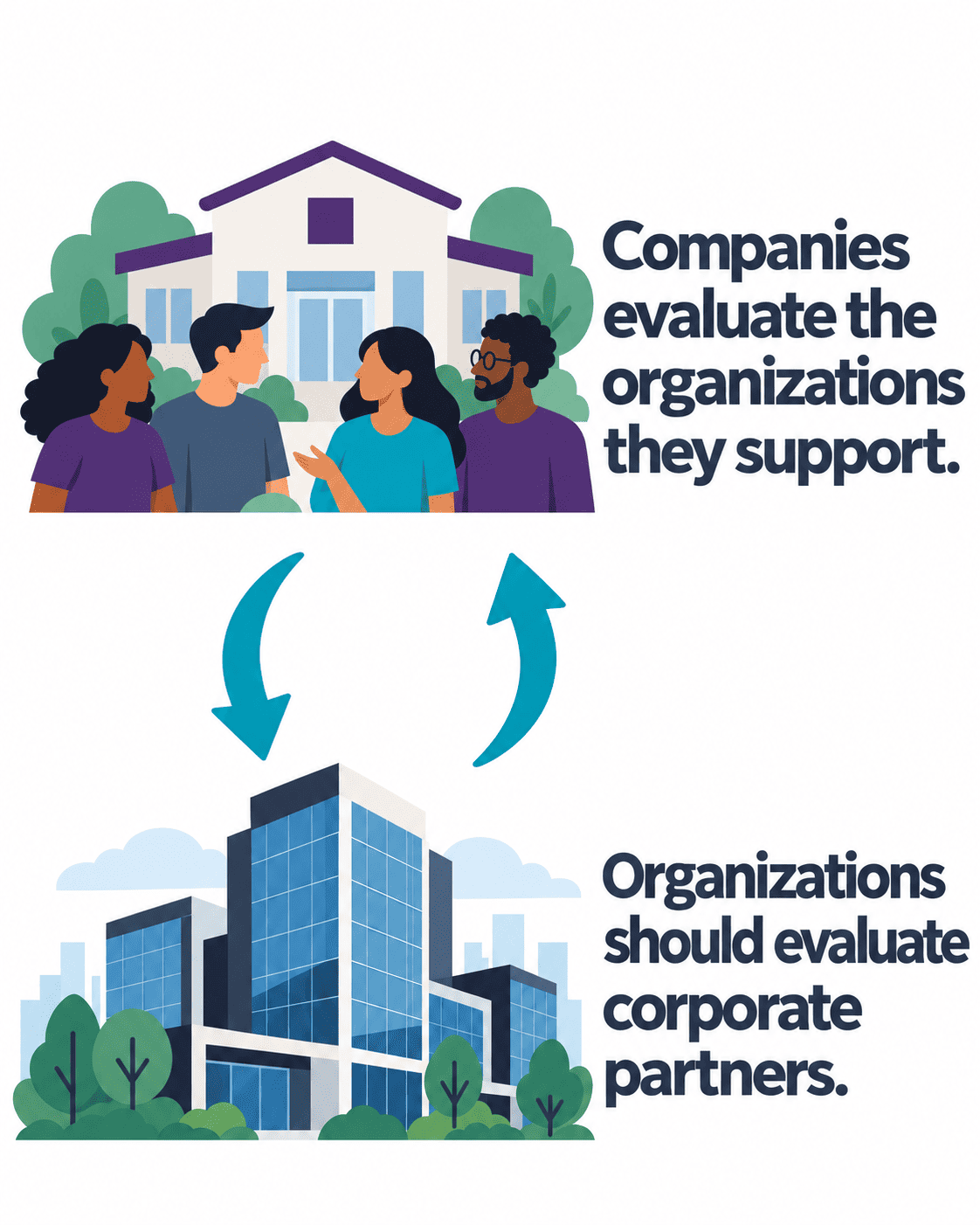
There is a lesson in that for every organization pursuing sponsorship. Reputation risk flows in both directions. Companies evaluate the organizations they support. Organizations should evaluate corporate partners with the same level of care.
That doesn’t mean searching for perfect partners. It means doing enough due diligence to understand who you’re partnering with, what they stand for, and how the relationship could be perceived by constituents, partners, and the public.
Four Questions Before Signing a Sponsorship Agreement
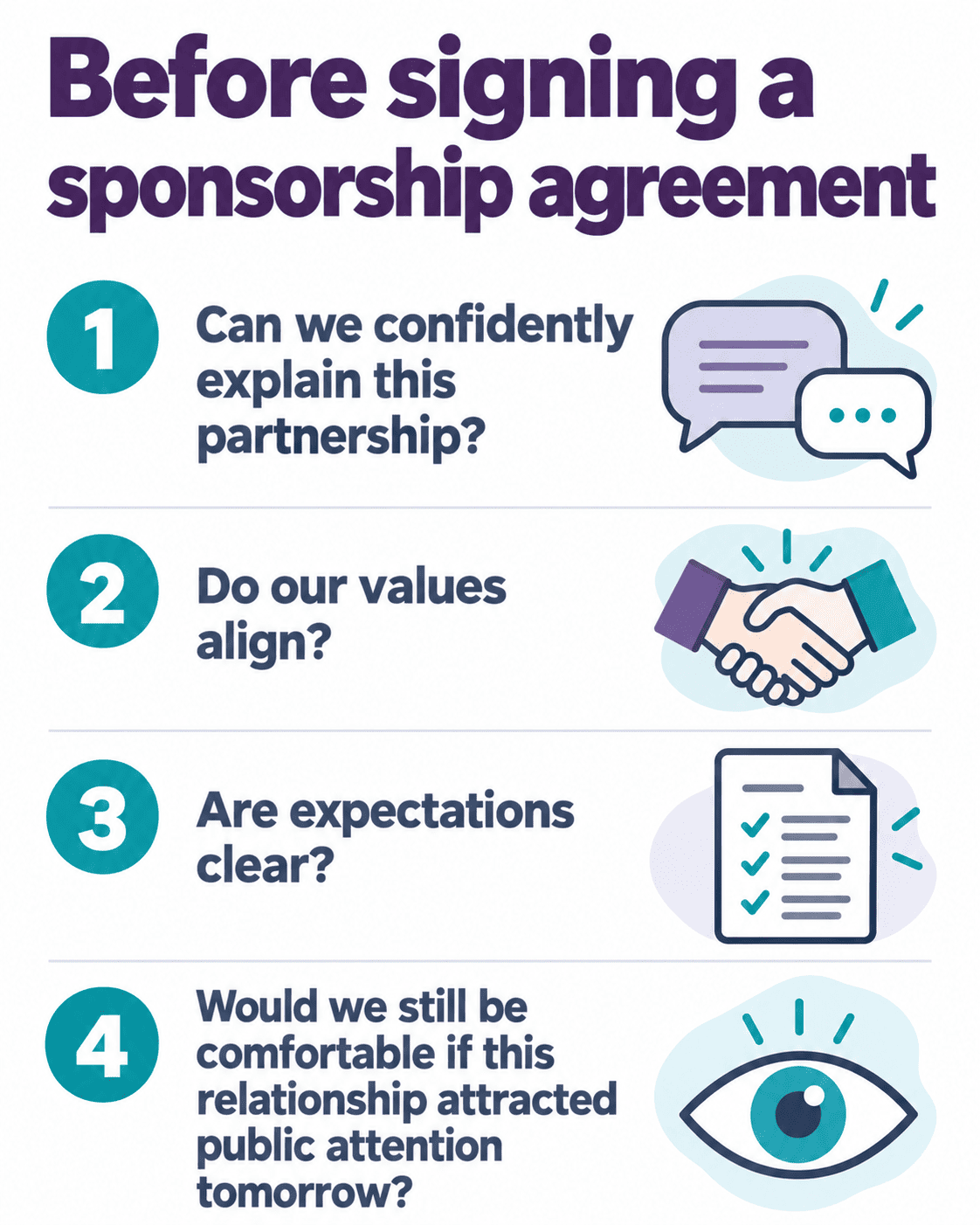
Before moving forward, both parties should be able to answer four simple questions.
-
Can we confidently explain this partnership?
-
Do our values align?
-
Are expectations clear?
-
Would we still be comfortable with this relationship if it attracted public attention tomorrow?
If those questions create uncertainty, more conversation is probably needed before an agreement is signed.
In my experience, the best way to prevent reputational damage is not to avoid sponsorships. It’s to build stronger partnerships. That means being transparent about expectations, being honest about objectives, establishing boundaries early, and creating accountability on both sides. It also means having regular conversations long after the agreement is signed.
Trust isn’t built through a sponsorship contract. Trust is built through the way a partnership is managed over time.
Choosing Sponsorship Partnerships Worth Pursuing
As organizations prepare for the next sponsorship cycle, I encourage leaders to spend less time asking who might sponsor them and more time asking what makes a partnership worth pursuing.
The organizations that will be most successful in 2027 won’t necessarily be those with the largest prospect lists. They’ll be the ones that understand their values, know what they’re looking for in a partner, and can confidently explain why sponsorship makes sense for everyone involved.
Because when sponsorship dollars become harder to secure, the quality of the partnership matters more than ever.
Assess Your Sponsorship Readiness
The AdvanceU Sponsorship Accelerator Self-Assessment helps nonprofits and post-secondary institutions identify strengths, opportunities, and potential risks in their sponsorship approach—including the partner-fit decisions that help protect their reputation.
Take the free Sponsorship Accelerator Self-Assessment to identify what needs attention before pursuing your next partnership.
AI Transparency Statement: AdvanceU 1st Consultants used generative AI to assist with research, organization, drafting, and editing of this article. All professional insights, interpretations, recommendation, and final editorial decisions reflect the expertise and judgement of AdvanceU.