


Before You Start Fundraising, Ask If You’re Ready
A fundraising campaign usually begins with a real need.
A program needs funding. The annual appeal needs stronger results. Planned Giving or alumni engagement needs attention. A new organizational priority requires revenue.
The need is not the problem.
The problem begins when the organization hands that need to the fundraising team before deciding where it sits among everything else already underway. The campaign becomes fundraising’s responsibility. If results do not come quickly enough, it can look as though fundraising is failing. But fundraising cannot move independently of the organization around it.
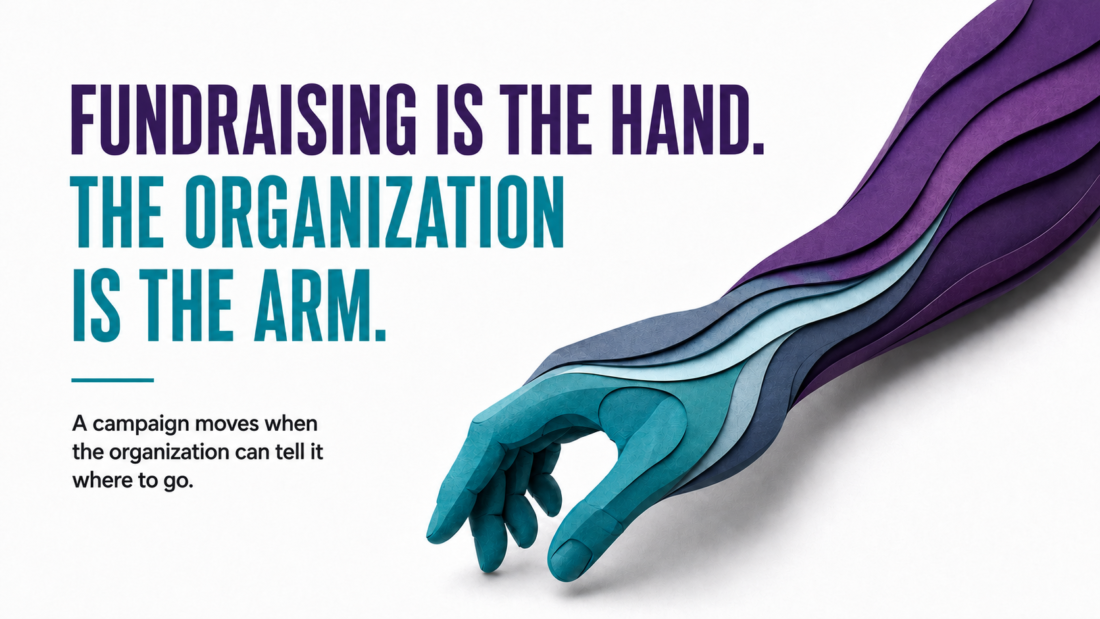
Asking it to do so is like asking the hand to move without engaging the arm.
Before starting the campaign, the organization needs to know why this priority matters now, what plans support it, and what the rest of the organization is prepared to contribute.
The Priority Has to Be Clear
When we refer to a campaign, we mean any focused fundraising effort. It may be annual, planned giving, capital, alumni, community based, or tied to a specific initiative. The format changes. The organizational question does not.
What result is this campaign expected to advance?
The Charity Insights Canada Project found that financial health was a priority for 66% of participating charities entering 2026. Programs and services were identified by 55%, while 38% named community outreach and engagement.
Several priorities can be important at the same time. That is normal.
The challenge is deciding which result requires attention now and how the organization will align around it. In a smaller charity, grant deadlines, program delivery, donor engagement, communications, and reporting may already sit with the same few people. In a smaller post-secondary institution, Advancement may be balancing student support, alumni engagement, institutional priorities, and pressure to demonstrate revenue quickly.
A new campaign does not remove those responsibilities. It enters an organization already carrying them.
If leadership, the board, and fundraising describe the purpose of the campaign differently, the priority is not clear. If the campaign is expected to address every unfunded need, strengthen every relationship, and increase every type of revenue, the organization has not made a decision.
It has given fundraising a collection of expectations.
That is how effort stays high without moving toward a shared result. Related reading is linked in the first comment.
The Plans Have to Point in the Same Direction
Most organizations already have plans.
There may be a strategic plan, operating plan, fundraising strategy, communications plan, and approved budget. The issue is not whether those documents exist. It is whether they support the same priority. Circumstances change. New needs emerge. Funding opportunities pull attention in another direction. Budget pressure creates urgency. Work is added, but the plans are not always reconsidered together.
In a smaller advancement shop, different parts of the institution may also hold different pieces of the work. Student Services understands the student experience. Career Services holds outcomes and employer relationships. Alumni teams understand engagement patterns. Advancement may be expected to assemble those pieces without the institution first agreeing on the priority they are meant to support.
No one deliberately creates this disconnect. The organization adapts until its plans, budget, and activity no longer describe the same direction.
A campaign will not repair that gap. Campaigns expose what is already true about the organization. Related reading is linked in the first comment.
Fundraising Does the Visible Work
Fundraisers bring evidence about the revenue opportunity. They understand where revenue comes from, what renews, which relationships are strong, what still needs to be built, and what a credible opportunity will require.
That evidence makes the organizational decision possible. It does not replace it.
Leadership and the board decide whether the campaign reflects the organization’s priorities. They commit time, resources, relationships, and attention. Program, communications, alumni, student, and community teams provide the stories, evidence, access, and connections that make the work credible.
These are not additional acts of support for fundraising. They are part of the campaign. When those contributions have not been discussed, fundraising is left carrying a result the organization has not fully chosen.
The campaign may struggle. That does not automatically mean fundraising has failed. It may mean the organization expected the hand to move without engaging the arm.
Readiness Is a Shared Responsibility
Organizational readiness does not require perfect systems. It requires a shared answer to a few important questions. What matters most right now? Do the strategy, operations, communications, revenue work, and budget support that result? Is ownership clear? What evidence makes the opportunity credible? What will leadership and the board contribute? If this campaign becomes a priority, what will receive less attention?
Those questions turn a campaign from another fundraising activity into an organizational decision.
They also turn a fundraising strategy from a list of possibilities into a clear direction. Related reading is linked in the first comment.
The free Prioritization Diagnostic begins with 13 questions across five organizational areas. In approximately 15 minutes, it provides the starting point for a personalized, expert-reviewed report showing where the organization is aligned, where gaps may weaken execution, and where to focus first.
Revenue, Stewardship, and Community and Communications deeper dives are available when further examination would be useful.
Before beginning another fundraising campaign, make sure the organization has decided why it matters and is prepared to move with fundraising.