



National Philanthropy Day: Show Donors What Their Support Made Possible
A thank-you that shows what changed
By November, small charities and advancement teams are often carrying more work than they have people to do it. Programs continue, grant deadlines arrive, year-end appeals need attention, and everyone is trying to protect some time with family and friends.
The pressure to increase revenue can keep us focused on the next ask while we give less attention to the people who have already supported us. With fewer than half of donors returning, an appeal can raise a familiar total while the organization works to replace donors lost along the way. Growing revenue becomes harder when we are continually rebuilding the support behind it. That makes what happens after someone gives an important part of the fundraising work already demanding our attention.
This year, we’re suggesting a practical use of National Philanthropy Day on November 15: send donors a meaningful thank-you accompanied by an impact report. Whether your year-end appeal is underway or still ahead, donors deserve to understand what their commitment has helped accomplish. An honest account of progress, including what remains unfinished, gives them something to respond to beyond another request for money. It can open conversations that help your team understand what matters to donors and give those donors a reason to remain connected to the mission.
How to Create a Donor Impact Report Using Existing Materials
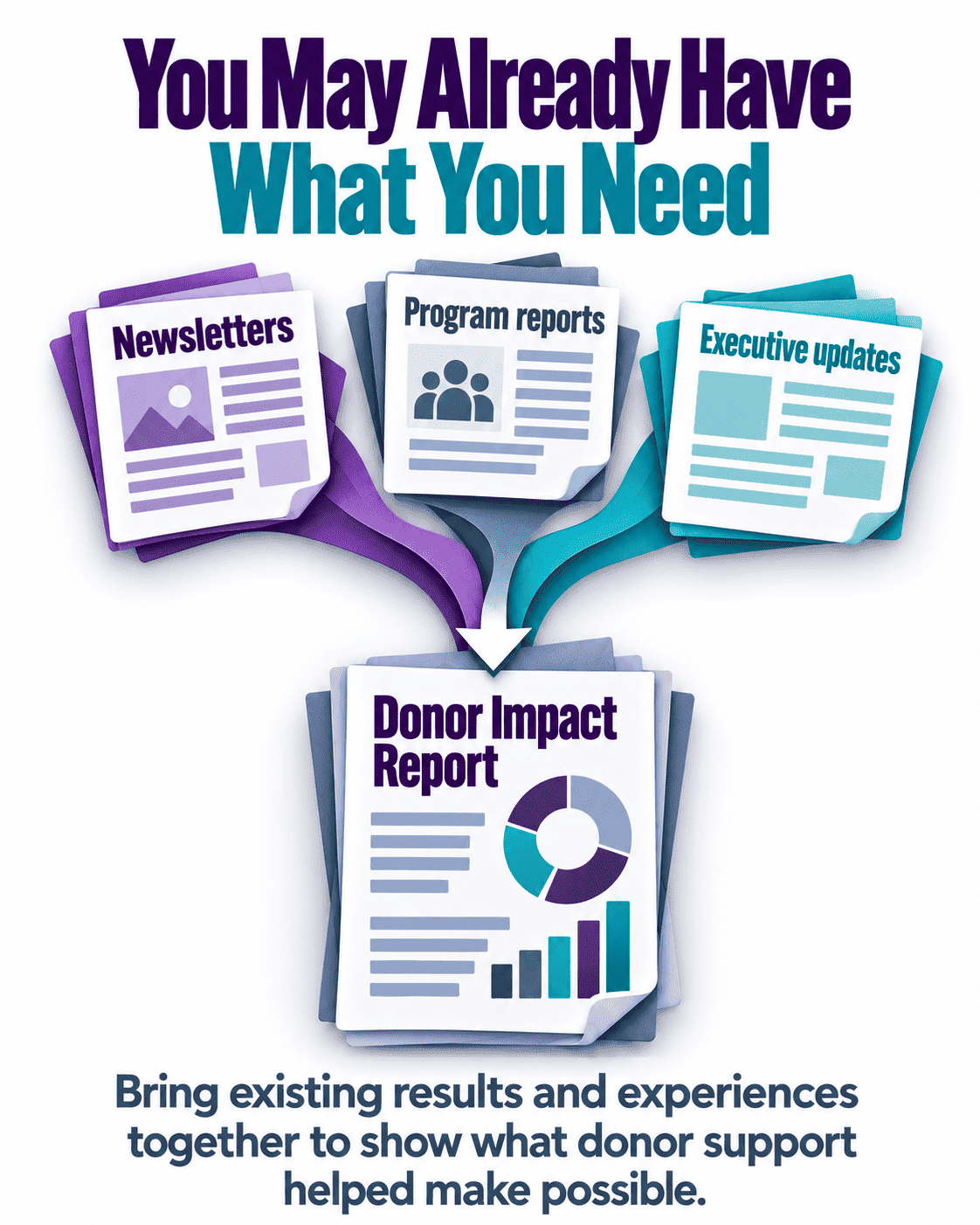
Start with the material already available. Your team is already explaining its work in newsletters, program reports, executive updates, and grant reporting. Look through those materials for information that will help donors understand how their support is advancing the mission.
Program reports may contain results alongside explanations of what helped or hindered progress. A newsletter may include an approved account from someone whose circumstances changed after accessing a service. An executive update may explain why a practical investment matters to the people you serve.
The connection to the mission is what makes that information useful. A soup kitchen’s report might describe the meals it provides and the ageing refrigerators its staff depend on. Together, those details help explain how donor support sustains the service and why reliable equipment matters to its continuation.
You already have stronger stories than statistics, or results alone. Is there a person’s experience available for use to give the stats context? Use what you can substantiate. Where progress has been slower than expected, existing reports may also help explain what happened, how the organization is responding, and more importantly in this context how donors can help.
Start with one fundraising priority and gather the material relevant to it. You are looking for an honest account of the work donors supported, including the changes it helped bring about and the needs that remain.
What Belongs in a Donor Impact Report
The material you have gathered needs to help donors understand the value of their support. A concise report can acknowledge their contribution, explain what happened, and give them someone to contact if they want to know more.
Acknowledge what their giving helped make possible
Begin with thanks connected to the work donors supported. For annual giving, this will often mean reporting on collective contributions to a fundraising priority. You might explain how much donors gave toward that work and what their combined support helped provide.
You do not need to assign a specific benefit to each gift. “Support from donors like you helped…” allows you to recognize an individual’s contribution within the broader effort, provided the connection accurately reflects how the funds were used.
Show the change and explain the context
Describe what happened for the people served. Providing a service tells donors what the organization delivered; explaining how someone benefited helps them understand why it mattered.
An approved quotation or short personal account can make that connection tangible. For example, someone describing how regular visits helped them feel less isolated gives meaning to a report on a visiting program. Preserve the person’s own perspective and use only material approved for this purpose.
Include relevant results where they are available, with enough context to interpret them. Be equally clear about work still underway, difficulties encountered, and goals not yet achieved. Donors should be able to understand both the progress their support contributed to and the continuing need.
Give donors a way to stay connected
Close with a named contact and an invitation to ask questions or discuss the work. The report gives your team a shared reference for those conversations and gives donors something they can return to.
Develop it as an account you can use throughout the year and update annually. That consistency helps demonstrate accountability for the commitment donors have made.
Donor Impact Reporting for Smaller Charities
Your Annual Appeal may only be a small part of how your organization funds its mission. For a small charity with substantial grant funding and a limited donor base, an impact report needs to explain how giving contributes to the work alongside other sources of support. The percentage of revenue raised through annual gifts does not, by itself, explain the value of those contributions.
A soup kitchen, for example, may receive grants that fund much of its programming while donations help cover food, equipment, or other operating needs. A report can explain how these sources come together to sustain the service and what that service means for the people who use it. Donors can understand the contribution of annual appeal without being told that donations alone made every meal possible.
Where your appeal offers specific giving destinations, reporting should reflect those choices. Donors funding refrigeration need to understand how that investment supports safe food storage and reliable meal preparation. If the appeal invites support for the mission more broadly, one report can bring together relevant results and experiences from across the work. There is no need to invent separate fundraising priorities to provide that account.
Develop reports for distinct priorities where doing so makes the information more relevant to donors. If there is time for one, begin with one. The purpose is to give donors a meaningful account of how supporting the organization advances its mission and what the charity can realistically deliver.
Thanking Donors on National Philanthropy Day
Your National Philanthropy Day message gives you an occasion to share the report. Use the message to thank donors and introduce what they will find: an account of the work they helped support, the progress made, and the needs that remain.
If your year-end appeal is already underway, connect the thank-you to that conversation. Acknowledge the appeal, then give attention to what donors have already helped the organization accomplish. Keep the tone and visual presentation consistent with existing communications so the message feels like part of the relationship you are building.
For an appeal supporting a community food program, the message might say:
“As our year-end appeal continues, we’re taking this National Philanthropy Day to thank the people helping sustain our community food program. The enclosed report shares how that support has contributed to the work, what it has meant for people accessing meals, and the challenges we continue to address. Thank you for being part of this commitment to our community.” [board chair name]
Adapt the wording to what you know about the recipients. Past donors, people who have already given to the current appeal, and those considering a gift may need different acknowledgements. Avoid language that assumes everyone has the same giving history.
Accompany the message with the report and make it easy to open, download, or request a copy. Include a named person, not necessarily the board chair or executive director,who can answer questions. That invitation matters: the report provides a starting point for donors to discuss the mission, understand its practical needs, and share what matters to them.
Practical Ways to Improve Donor Retention
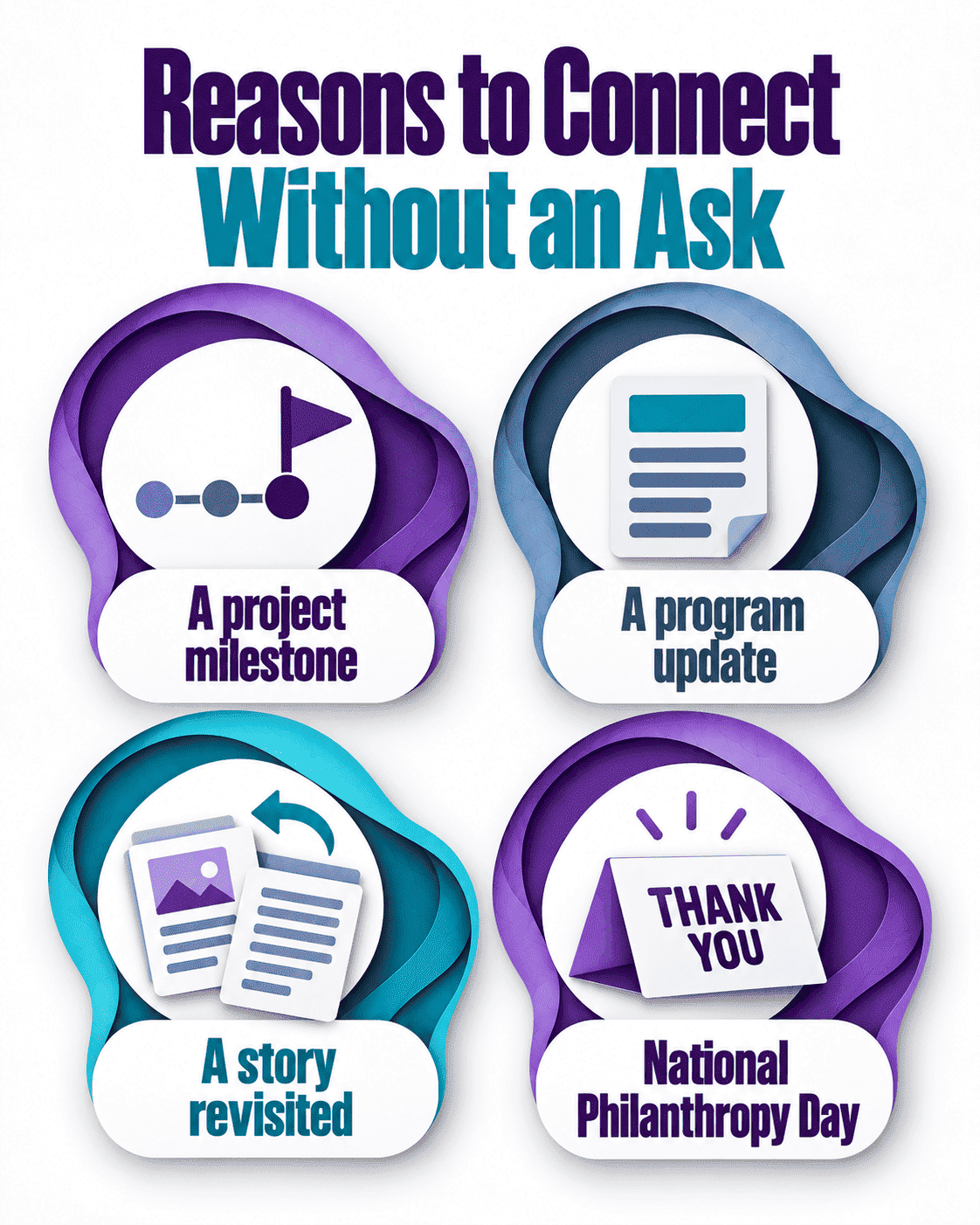
National Philanthropy Day is one reason to reach out without a solicitation attached. During the year, a project milestone, a program update, or news about work featured in an earlier appeal can provide other opportunities. Look for these within communications already being prepared and consider what would be meaningful to the donors who supported that work.
Use the impact report in those conversations. When donors respond, make time to answer and record what you learn about their interests. That information can help the next communication feel connected to the relationship, rather than another general message.
These are practical steps toward giving existing supporters more consistent attention. Improving retention also requires looking at what happens across the donor relationship. Are gifts acknowledged appropriately? Do donors hear what happened afterward? Is someone responsible for responding and following up?
Looking for ways to prioritize your workload? We have resources that can help you understand where to begin, make decisions with increased clarity, and take action. If you are looking for ways to examine donor retention, acknowledgement, recognition, reporting, and engagement, our Stewardship Lever offers a starting point about what is already working and where changes could help sustain the support behind the mission.
AI transparency: AdvanceU 1st Consultants developed this article from our professional experience and source materials. We used generative AI to support research, drafting, editing, and graphic creation. We reviewed and approved the final content; the professional judgment and editorial decisions are ours.
No Comments